
Fusion Cryogenic Systems Explained: Why a Machine at 100 Million Degrees Needs a Refrigerator
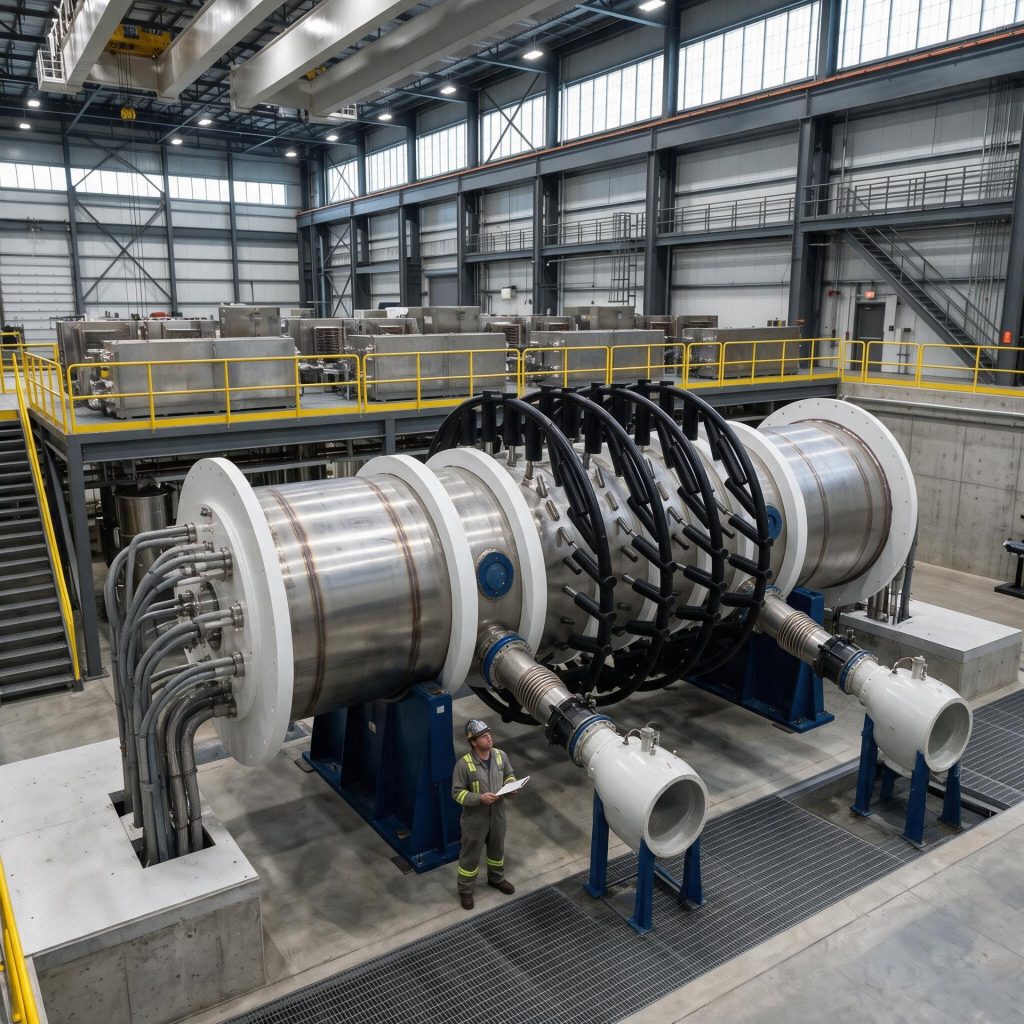
Superconducting magnets and cryopumps put some of the coldest industrial equipment on Earth a few meters from the hottest. The cryoplant is one of the largest loads in the facility.
By Timothy Porritt · Porritt Inc. · November 21, 2026
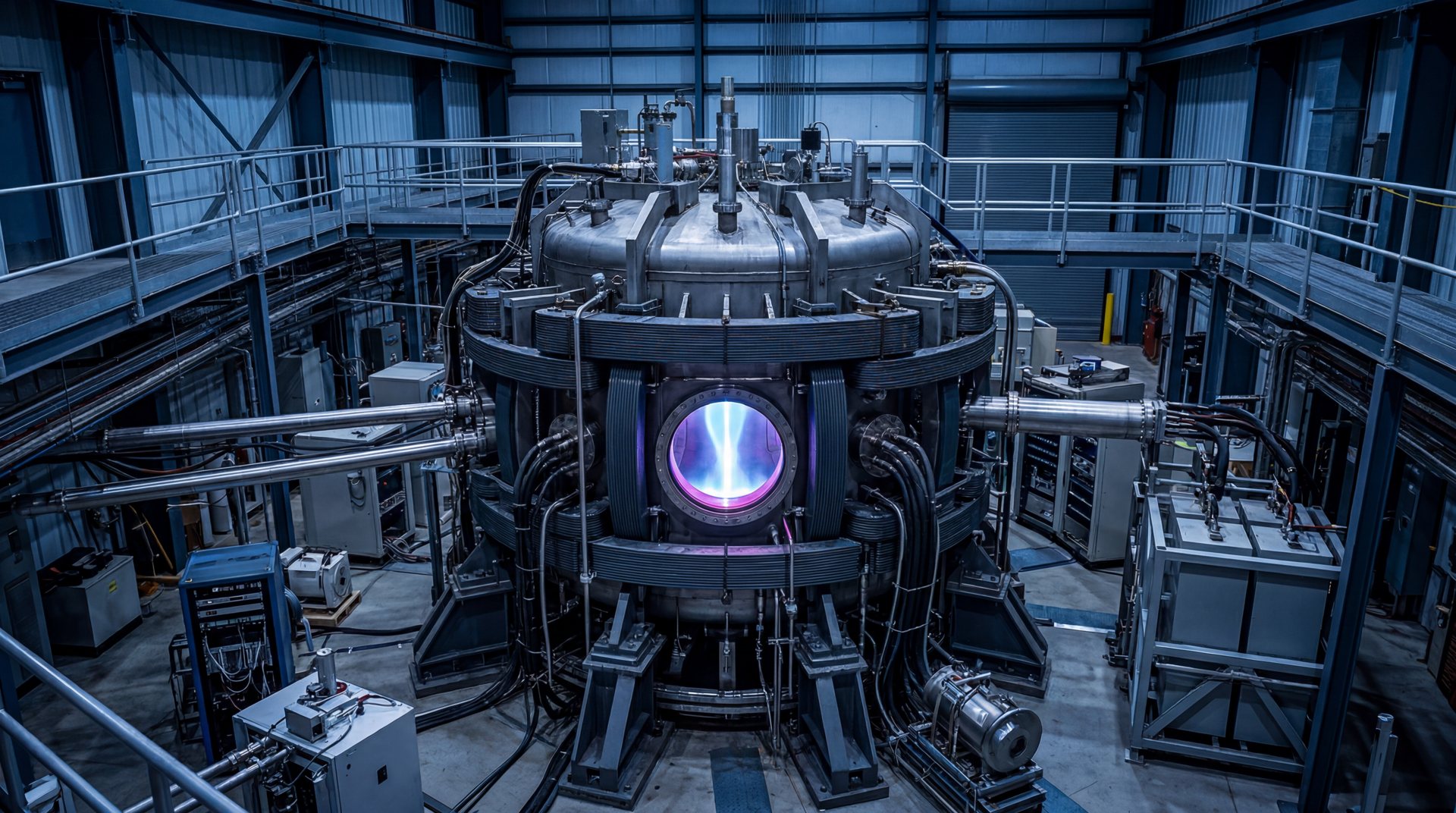
Magnetic confinement fusion depends on very strong magnetic fields, and the only practical way to sustain them without consuming enormous power is with superconductors. Superconductors work only when cold. That requirement puts a large cryogenic plant at the center of the facility.
What Needs to Be Cold
- Superconducting magnets. Conventional low-temperature superconductors operate near 4.5 kelvin, cooled with liquid or supercritical helium. Newer high-temperature superconductors can carry very high currents at around 20 kelvin, which eases the refrigeration burden and allows higher fields.
- Thermal shields. Intermediate shields, typically around 80 kelvin, intercept heat radiating from warmer structures before it reaches the magnets.
- Current leads. The connections that bring current from room-temperature power supplies into the cold magnets are a major heat leak and are cooled along their length.
- Cryopumps. Surfaces cold enough to freeze or adsorb gases provide the high pumping speeds needed for the vacuum vessel and fuel exhaust.
- Fuel systems. Frozen fuel pellets and cryogenic isotope separation in the fuel cycle.
How a Cryoplant Works
A helium refrigerator compresses helium gas at room temperature, removes the heat of compression, then cools the gas through a series of heat exchangers and expansion turbines inside an insulated cold box. Cold helium is distributed through vacuum-jacketed transfer lines to the loads and returns warm to the compressors. Liquid nitrogen is often used for precooling and for the thermal shields.
The Thermodynamic Penalty
Removing heat at very low temperature is expensive. Thermodynamics sets a minimum work requirement that rises steeply as temperature falls, and real machines do considerably worse than the ideal. In practice, removing one watt of heat at 4.5 kelvin takes several hundred watts of electrical power at room temperature. At 20 kelvin the penalty is several times smaller. This is one reason high-temperature superconductors matter beyond field strength: they reduce one of the plant’s largest house loads.
Operating Realities
- Cooldown takes time. Bringing thousands of tonnes of magnet structure from room temperature to operating temperature takes weeks, and thermal stresses limit how fast it can go. Every warm-up and cooldown is lost availability.
- Loads vary. Pulsed operation and nuclear heating change the heat load, and the cryoplant has to follow without losing stability.
- Quench. If part of a magnet stops superconducting, its stored energy must be extracted quickly and the resulting helium pressure rise handled safely.
- Helium is a managed resource. Inventory, purity, and recovery all need attention; losses are costly.
- Safety. Cryogenic releases bring oxygen-deficiency and overpressure hazards that need the same rigor as any process safety hazard.
Why It Matters
The cryoplant is rotating machinery, heat exchangers, and process control, operated continuously. Its reliability limits plant availability, and its power consumption comes straight off net output. Industrial gas and LNG experience applies directly here, which makes cryogenics one of the more tractable parts of a fusion plant, provided it is treated as a core system and not as a utility.
For the wider picture see What Is Fusion Balance of Plant? and Fusion Plant Control Architectures.
Related reading
- What Is Fusion Balance of Plant? The Systems Around the Reactor That Decide Whether It Makes Power
- Tritium Systems Explained: The Fuel Cycle Inside a Fusion Plant
- Fusion Plant Control Architectures: Plasma Control, Plant Control, Interlocks, and Safety
- Fusion Plant Cybersecurity: Designing First-of-a-Kind Plants So a Bad Command Cannot Break Them
Timothy Porritt is founder of Porritt Inc., building AI-powered tools for process safety, engineering compliance, and industrial operations. Based in Salt Lake City, Utah. Contact: timothy@porrittinc.com.

