Cyber-Informed Engineering for Utilities: Designing the Grid to Fail Safely
Electric utilities already design for faults, storms, and equipment failure. CIE asks them to design for a deliberate, coordinated misuse of their own control systems.
By Timothy Porritt · Porritt Inc. · November 21, 2026
Utilities are good at contingency planning. N-1 criteria, protection coordination, and storm restoration are all exercises in assuming something will fail and making sure the system survives it. Cyber-Informed Engineering extends that habit to one more contingency: the control and protection systems themselves being turned against the grid.
What the Incidents Taught
In December 2015, attackers took over operator workstations at several Ukrainian distribution companies and opened breakers remotely, cutting power to roughly 225,000 customers. Service came back within hours largely because crews could drive to substations and close breakers by hand. A year later a second attack used malware built to speak grid control protocols directly.
Two engineering lessons stand out. First, the attackers used the system as designed: legitimate commands, sent through legitimate paths. Second, restoration depended on a capability many modern designs are quietly removing, the ability to operate without the digital layer.
Start With Critical Functions, Not Assets
A utility’s asset inventory can run to hundreds of thousands of devices. CIE narrows the problem by starting from function. For a transmission or distribution operator the list is short: keep protection working, keep the ability to switch, keep voltage and frequency within limits, and keep the ability to restore from a blackout.
For each function, ask what the worst credible misuse looks like. Coordinated opening of breakers across many stations. Protection settings changed so relays fail to trip, or trip falsely. Out-of-phase reclosing that damages rotating machines, the scenario demonstrated in INL’s 2007 generator test. Loss of visibility in the control center during a disturbance.
Engineered Barriers That Fit Utility Practice
- Local manual control that stays usable. Keep local control at the breaker, train on it, and exercise it. A manual mode nobody has used in ten years is not a barrier.
- Protection that does not depend on the network. Critical protective functions should trip on locally measured quantities, with settings changes requiring physical presence or a hardware enable.
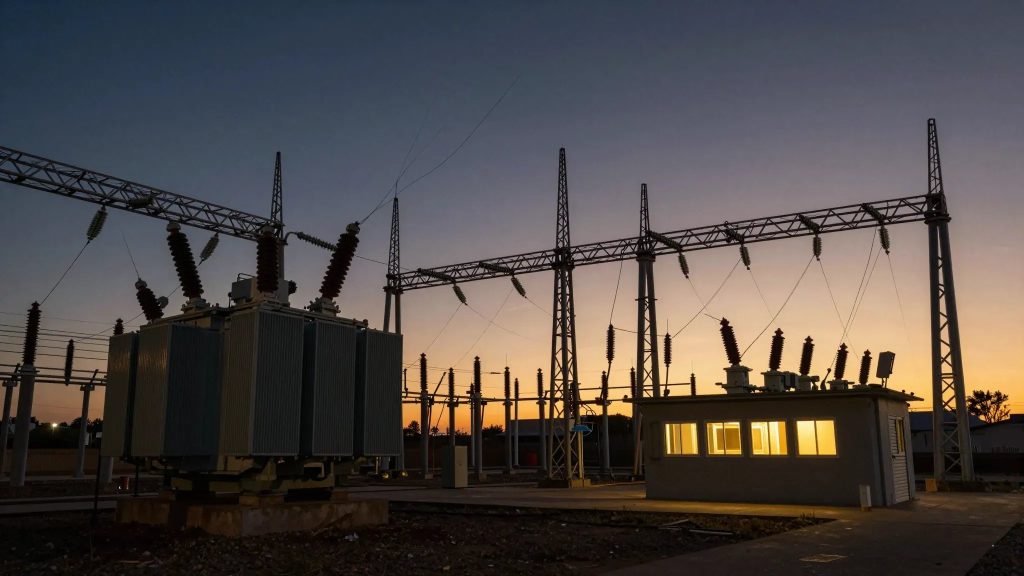
- Physical checks on dangerous actions. Synchronism-check relays and mechanical interlocks stop out-of-phase closing regardless of what the command path says.
- Limits on common-mode exposure. If one relay model, one firmware version, and one settings tool cover every critical station, one compromise covers them too. Deliberate diversity at the most critical sites is an engineering decision, not an IT one.
- Black-start paths with minimal digital dependence. The restoration plan should work when telemetry and remote control are unavailable or untrusted.
Where This Meets Compliance
Most transmission owners already live under NERC CIP. CIP tells you which cyber systems to protect and how; it does not tell you whether the station should be able to hurt itself. Both are needed, and the relationship is laid out in CIE and NERC CIP.
Why It Matters for Capital Planning
Substation rebuilds, relay replacement programs, and distribution automation projects are being scoped now and will be in service for decades. Adding a hardwired interlock or preserving a local control panel is cheap in the design package and expensive as a retrofit. The same applies to the generation, storage, and large-load interconnections arriving on utility systems.
A First Step
Take one planned substation project and add a single agenda item to the design review: for each critical function, what stops a valid but malicious command? If the only answers are firewalls and passwords, there is engineering left to do. For the underlying method see What Is Cyber-Informed Engineering? and for a working template see the CIE Implementation Checklist.
Related reading
- What Is Cyber-Informed Engineering? A Plain-Language Guide for Engineers
- The INL CIE Framework Explained: The 12 Principles in Working Terms
- A Cyber-Informed Engineering Implementation Checklist for Plant and Utility Teams
- CIE vs. Traditional OT Security: What Changes When Engineers Own the Problem
Timothy Porritt is founder of Porritt Inc., building AI-powered tools for process safety, engineering compliance, and industrial operations. Based in Salt Lake City, Utah. Questions about applying Cyber-Informed Engineering to a specific facility: timothy@porrittinc.com.