The plant's memory is scattered
Shift notes in a binder, work orders in a CMMS nobody opens, drill records in a spreadsheet, the process historian in its own silo. When something goes wrong, the context that explains it is in four places and none of them talk to the P&ID.
One operating layer, one tag namespace
Plant Intelligence keeps the operating records against the same equipment tags the engineers drew and the compliance program certified, and watches the live process for the events the PSM program exists to prevent.
Fewer surprises, shorter shifts
- Unit status and open items visible at shift change
- Preventive maintenance that follows inspection intervals
- Readiness that is tracked, not assumed
- Anomalies scored before they trip the alarm
Commercial release: available to license and install today. Beta: customer evaluation. Pilot program: deployed with design partners under evaluation agreements. Development: not yet released. Research: direction, not a product.
Four applications on one shell.
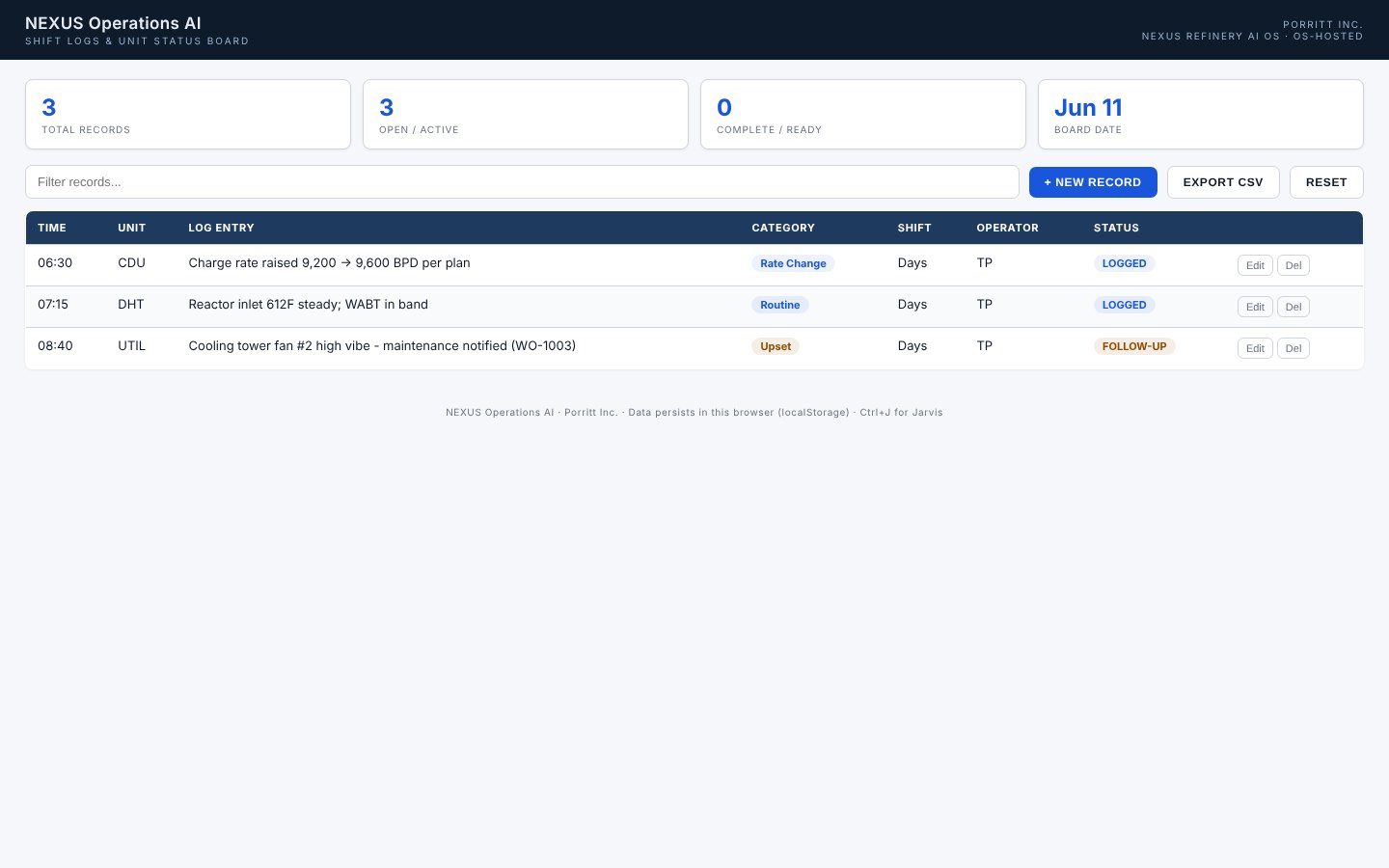
Shift logs and unit status
Every log entry carries a unit, a category, a shift and an operator, and resolves to a status. Charge-rate changes, reactor conditions, utilities notices land on one board the oncoming shift reads in two minutes, exportable for the daily report.
- Board by date with open / active / complete counts
- Category and shift filters, CSV export
- Data persists in the facility's own browser or shared store
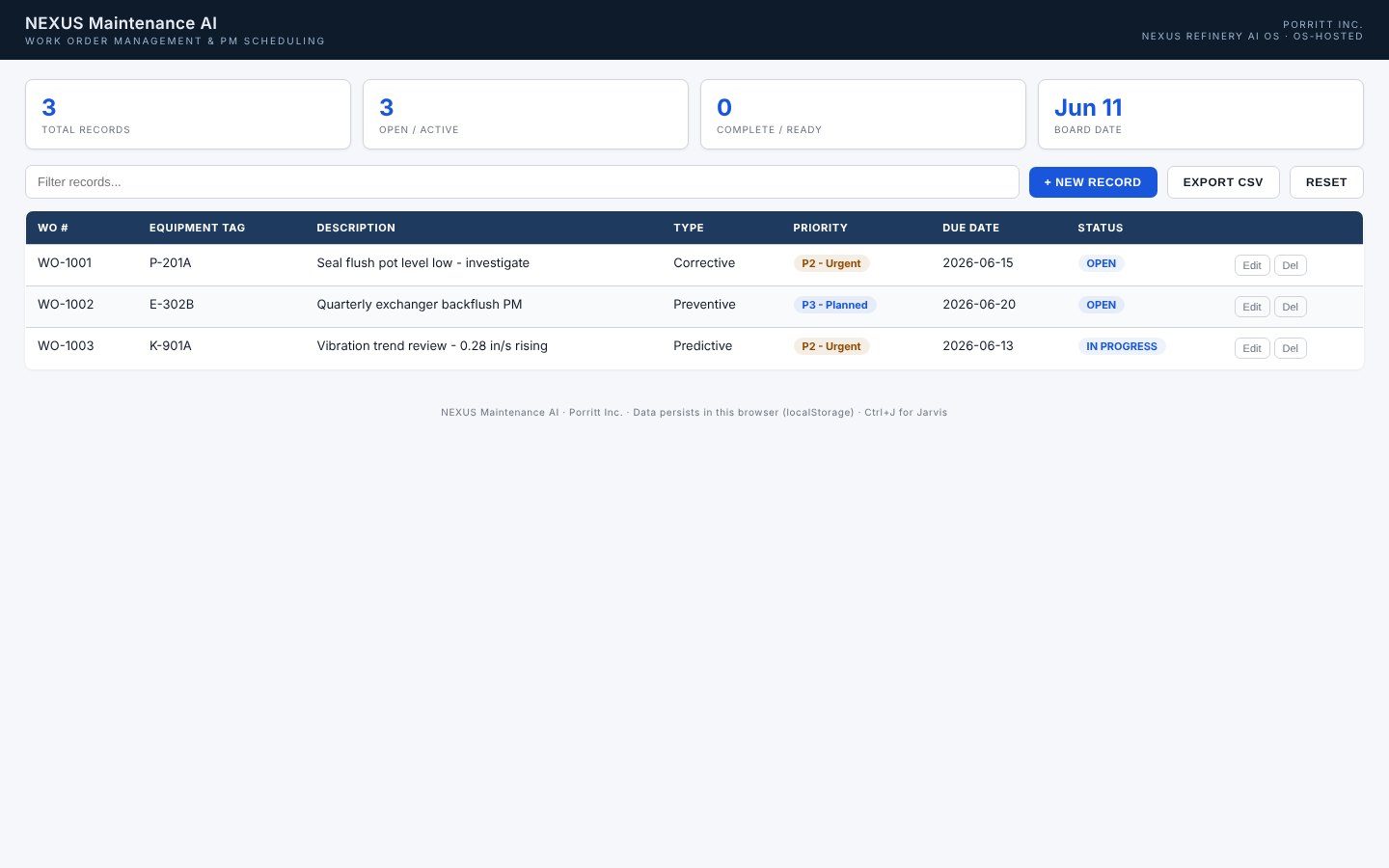
Work orders and PM scheduling
Corrective, preventive and predictive work orders against tagged equipment, with priority, due date and status. The equipment tag is the same one in the NEXUS model and the NORMEX mechanical-integrity record, so an inspection finding becomes a work order without re-keying.
- WO types: corrective, preventive, predictive
- Priority and due-date tracking with overdue visibility
- Export for CMMS reconciliation or audit
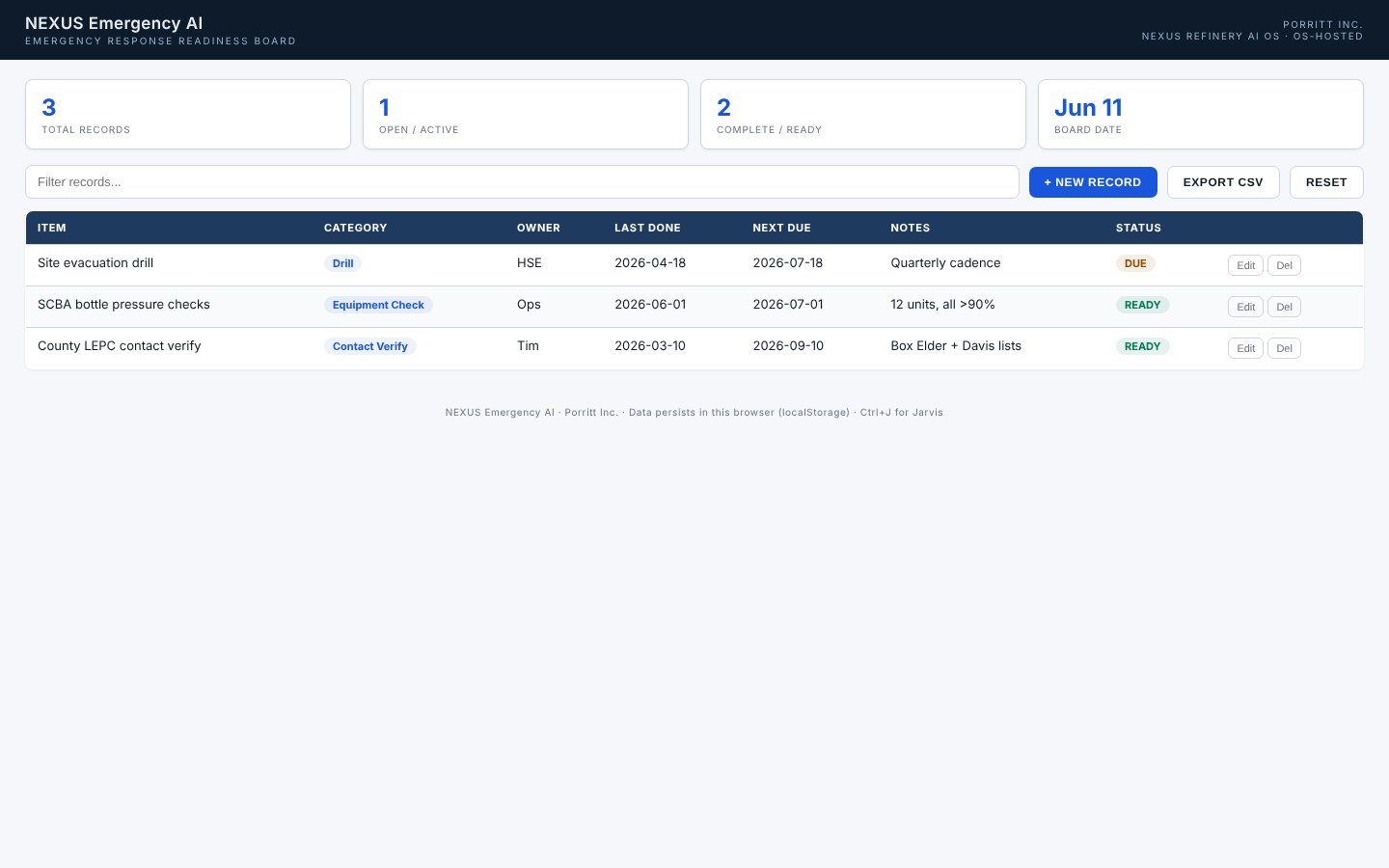
Emergency response readiness
Drills, equipment checks and contact verifications with an owner, a last-done date and a next-due date. The board answers the question an auditor and a shift supervisor both ask: are we ready right now?
- Drill cadence tracking against the emergency plan
- SCBA, detection and contact-list verification
- Supports OSHA 1910.119(n) emergency planning records
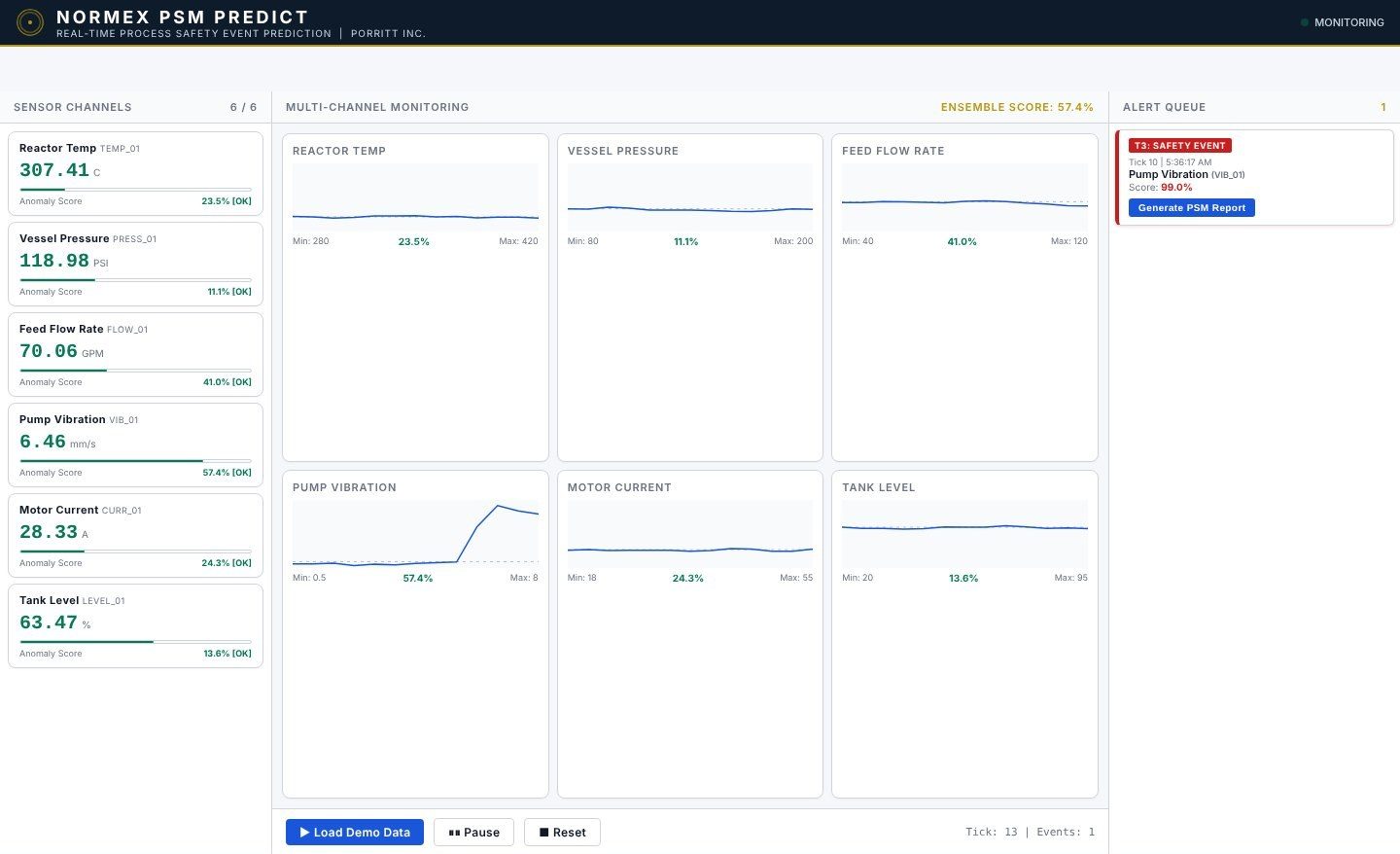
Process safety event prediction
The sensing layer of the family. Six channels or sixty: reactor temperature, vessel pressure, feed flow, pump vibration, motor current, tank level, each scored by an Isolation Forest plus LSTM ensemble against its safe envelope. Tiered safety events raise with a PSM report one click away.
- OPC-UA to historians and controllers
- Per-channel and ensemble anomaly scores
- Shared with the NORMEX compliance family
The shell that hosts the family
One screen, shared data, launch and persistence for every Plant Intelligence application. Becomes the HELIA operator environment.
Fleet supervisory console
Supervisory view across units and sites: status, dispatch, recall and the voice-driven operator layer.
NORMEX certifies what runs here
PSM elements tracked in NORMEX are the elements these boards keep current.
Fusion balance of plant
The same operating layer, scaled to the plant around the plasma.
Plant Intelligence reads from control systems and historians; it does not write to controllers. Safety instrumented functions and basic process control remain with the certified control system and the operators. Product maturity is stated on each card; pilot-program applications are deployed with design partners under evaluation agreements.
What is Plant Intelligence?
The operating layer of the Porritt Inc. software stack: the applications a facility uses every shift. Operations AI keeps the shift log and unit status board, Maintenance AI manages work orders and preventive maintenance, Emergency AI tracks response readiness, and PSM Predict scores live process data for safety events. They share one equipment tag namespace with NEXUS and NORMEX.
Is Plant Intelligence a control system?
No. It sits above the DCS, PLC and SCADA layer and never writes to a controller. It reads historians and OPC-UA tags, keeps the human records a plant runs on, and advises; control stays with the control system and the operators.
What is the Refinery AI OS?
The shell that hosts the Plant Intelligence applications on one screen with shared data, launch and persistence. It is the same shell that becomes the fusion balance-of-plant operator environment in the HELIA program.
How mature are these products?
Operations AI, Maintenance AI and Emergency AI are in pilot with design partners; PSM Predict is in beta; the Refinery AI OS shell and Porritt Command are in pilot. Maturity badges on every product card state the current status.
Run one unit on it for one quarter.
Pilot programs start with a single unit, the shift log and the work-order board, and grow from there.
DISCUSS A PILOT → All software →