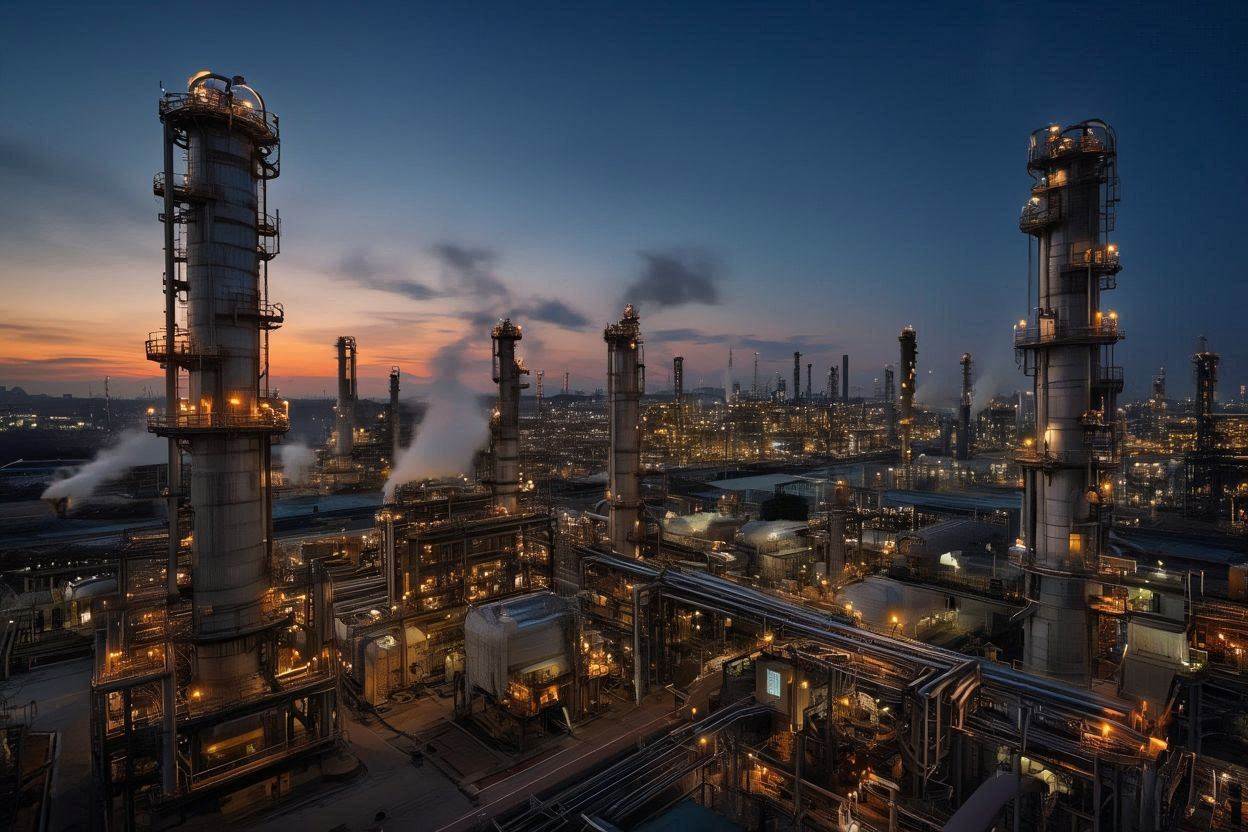
Refineries — our home turf.
Born in refining. Our stack instruments crude, vacuum, hydrotreating, and utilities systems with unified supervisory control, PSM-aware interlock logic, and degradation-informed alarming — the control room your process engineers actually asked for.
Unit-level SCADA
Crude to blending: one tag namespace, one alarm philosophy, one HUD across every unit.
PSM-aware interlocks
Machine protection mapped directly to your process-safety case — auditable end to end.
Integrity-informed ops
MATDEG corrosion and remaining-life models feed live operating envelopes, not annual reports.
Power generation — fission to fusion.
Steam plants, combined cycle, advanced fission, and the fusion facilities to come. Heat-source agnostic by design: an initial operating run on fission heat with engineered tie-in taps to retrofit fusion heat sources after testing — the balance of plant carries forward.
Thermal-cycle supervision
Feedwater, condensate, cooling, and turbine auxiliaries under one supervisory layer.
Grid-interface control
Step-up, aux distribution, and ride-through logic engineered for grid transients.
Heat-source agnostic
The same BoP layer whether the heat comes from flame, fission, or — after testing — fusion.
LNG & gas processing — cold, fast, unforgiving.
Liquefaction trains and cryogenic storage share DNA with our fusion cryoplant work: deep-cold thermal management, boil-off control, and compressor trains that cannot hiccup.
Cryogenic supervision
Train-wide cold-box monitoring with event-driven anomaly detection on rotating equipment.
Boil-off management
Storage and loading control that treats every molecule as revenue.
Compressor protection
Surge and vibration reflexes faster than a polling loop can deliver.
Hydrogen & ammonia — the new molecules.
Electrolysis, synthesis loops, and storage for the hydrogen economy — wide-range electrical supervision married to classic process control, with leak-aware instrumentation philosophy throughout.
Electrolyzer fleet control
Stack-level supervision that follows renewable input without wearing the asset out.
Synthesis-loop BoP
Compression, refrigeration, and storage under one integrated control envelope.
Leak-aware sensing
Distributed detection designed for the smallest, fastest molecule in industry.
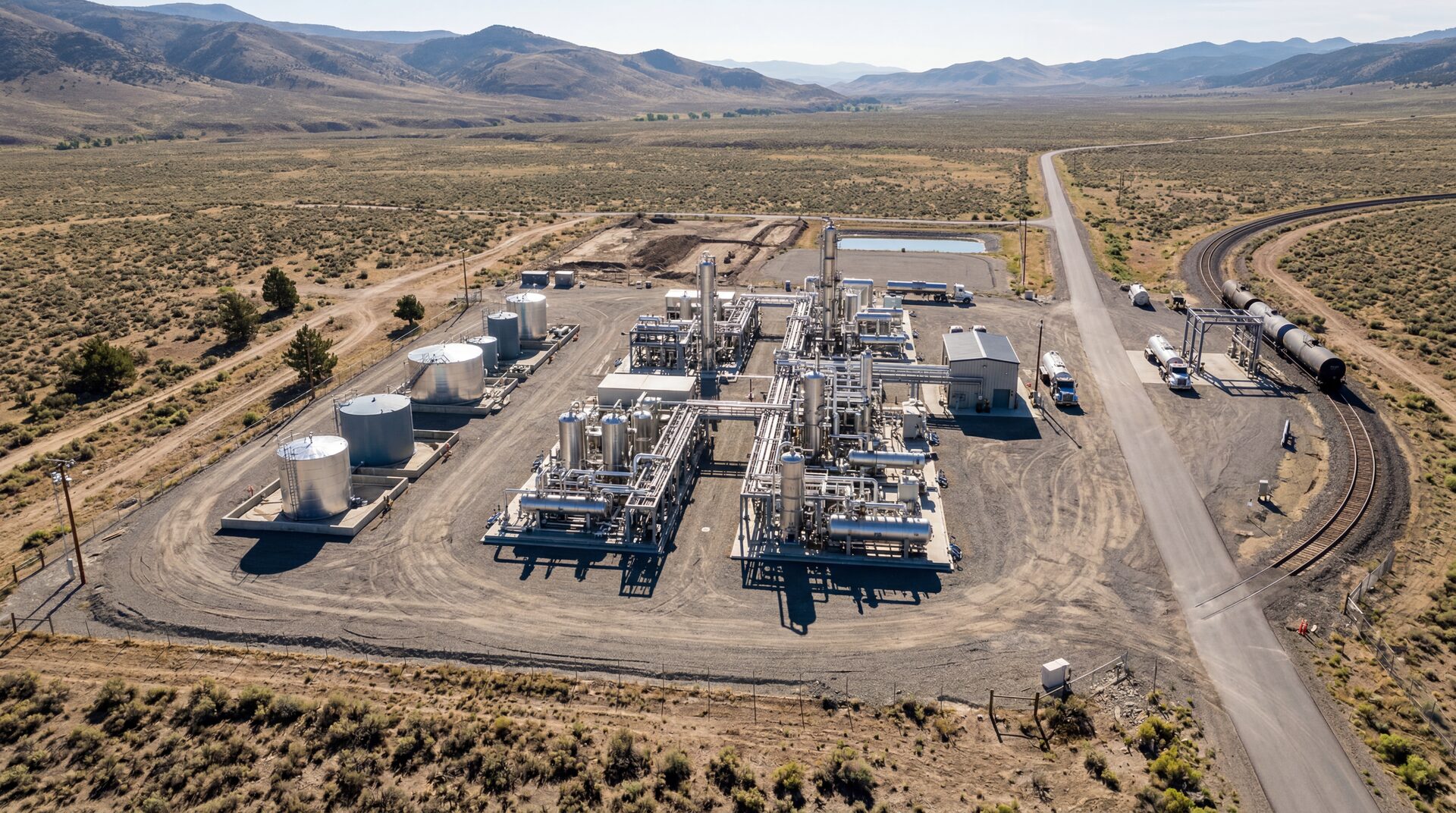
Carbon capture — the retrofit century.
Capture units bolt onto existing facilities — which means their controls must speak to legacy systems without breaking them. Integration is the product.
Capture-train control
Absorber, regenerator, and compression supervision tuned for load-following capture.
Legacy integration
Bridges to incumbent DCS platforms — capture without a control-room rebuild.
MRV-ready data
Measurement, reporting, and verification data captured at the historian level by design.
Why our BoP architecture is different.
Most plant control stacks were designed around one vendor, one heat source, and a human watching a screen. Ours was designed around the plant.
| Traditional DCS | Porritt BoP |
|---|---|
| Vendor locked | Vendor neutral |
| Heat-source specific | Heat-source agnostic |
| Human driven | AI assisted |
| Static analytics | Predictive analytics |
| Separate systems | Unified architecture |
Your facility, our control layer.
Start with a single unit or a single problem. The architecture scales from there.
SCOPE A PILOT → MARINE VESSELS →