
AI’s Nuclear Reckoning: Why Data Centers Are Buying Fission Now
Nine-plus gigawatts under contract, a five-year interconnection queue, and the first commercial non-light-water construction permit in forty years.
By Timothy Porritt · Porritt Inc. · August 22, 2026
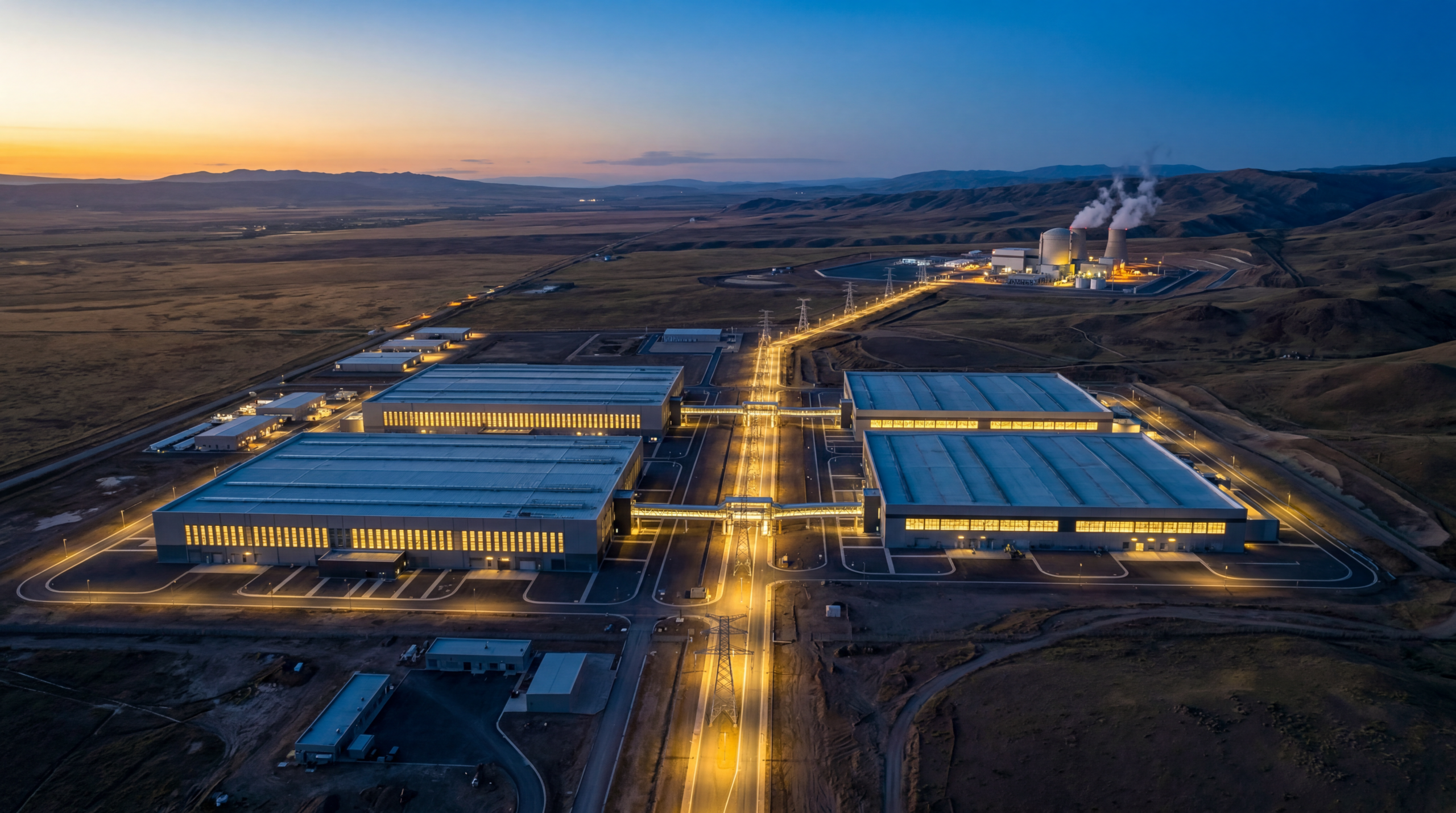
For fifteen years American electricity demand was effectively flat. Efficiency gains in lighting, motors, and building envelopes offset every increment of new load. Utility planners built their careers on that assumption, and the interconnection process, the transmission planning cycle, and the generation queue were all designed around a system that was not growing.
That era ended. The U.S. Energy Information Administration projects power demand reaching roughly 4,283 billion kilowatt-hours in 2026, up from a record 4,097 billion kWh in 2024. More telling than the total is the composition: commercial electricity use, the category that carries data centers, is expected to outpace residential use in 2026 for the first time on record. Data centers alone account for the majority of incremental demand growth.
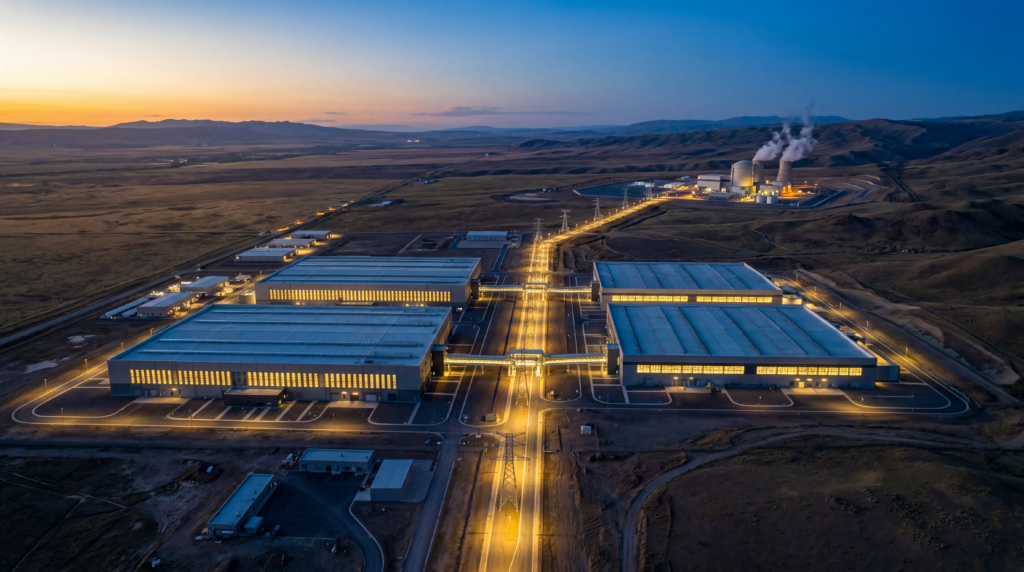
The gigawatt figures are what force the decisions. U.S. data center power draw is projected to move from about 31 GW in 2025 to 41 GW in 2026, and to roughly 66 GW the following year. As a share of total peak summer demand, that is a climb from 4.1 percent to 5.3 percent to 8.5 percent in three years. No other load class in modern American history has scaled that way.
The Queue Is the Binding Constraint, Not the Generation
The instinct is to treat this as a generation problem. It is not, or at least not primarily. It is an interconnection problem, and the distinction determines which technologies actually get bought.
The U.S. interconnection queue exceeded 2,600 GW of proposed capacity in early 2026. Average wait times approach five years. Withdrawal rates — projects that enter the queue and never energize — run near 80 percent. A developer who signs a lease, orders transformers, and secures GPUs can still find that the one input with no substitute, grid capacity, is four to six years out.
This is why speed to power has displaced land cost, fiber proximity, and even tax abatement as the dominant site-selection criterion. It also explains a fact that nuclear advocates sometimes skip past: the immediate bridge for most of these campuses is natural gas. On-site turbines and reciprocating engines, originally framed as temporary, are becoming permanent fixtures of the data center power stack because they can be commissioned in eighteen months rather than sixty.
Nuclear is not competing with gas on speed. It is competing on what happens after the bridge — on the twenty-year cost, carbon, and firmness position once the campus is built and the compute is loaded.
The 9.8 Gigawatt Ledger
Across roughly thirteen tracked transactions through mid-2026, the four largest U.S. hyperscalers have committed on the order of 9.8 GW of nuclear capacity to AI infrastructure. The deals split into two structurally different categories, and conflating them produces bad analysis.
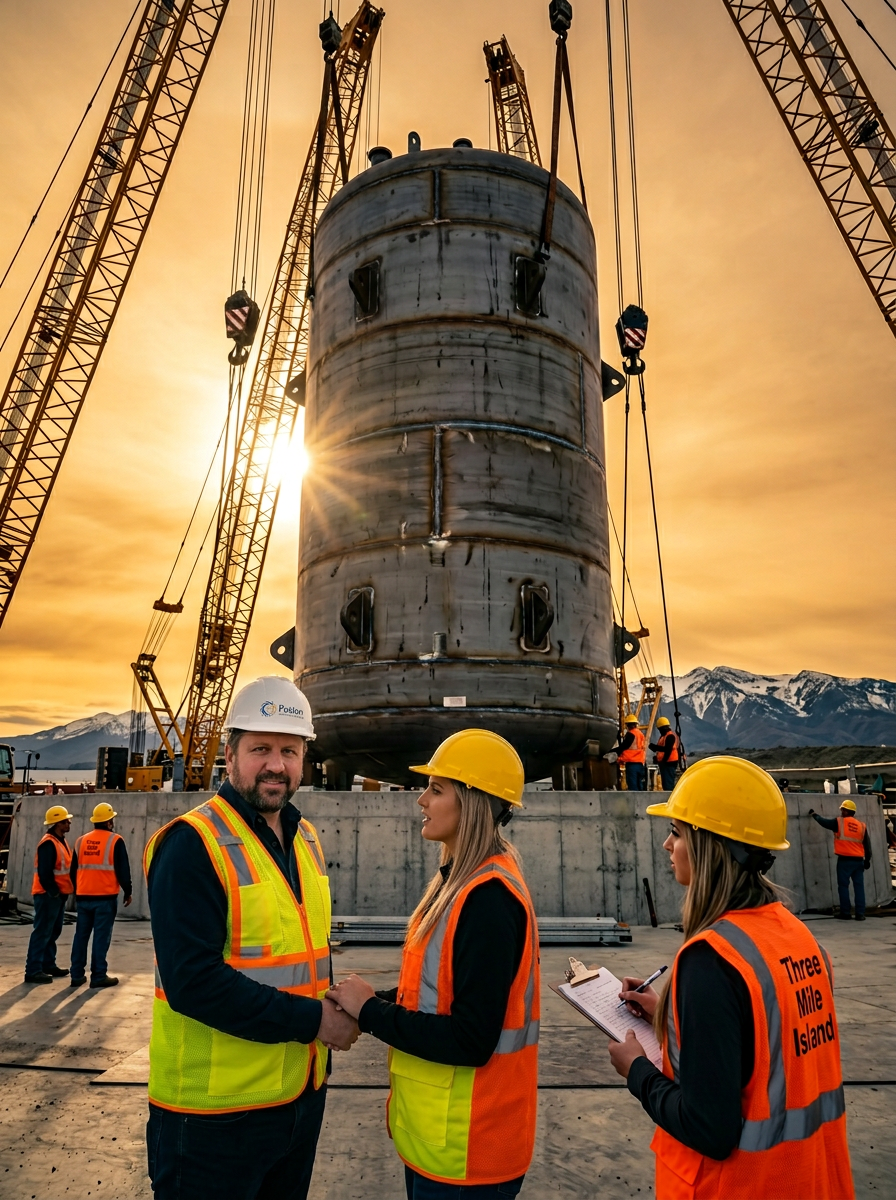
Microsoft holds the most advanced position: a twenty-year power purchase agreement with Constellation Energy for the full 835 MW output of Three Mile Island Unit 1, now the Christopher M. Crane Clean Energy Center. This is a restart, not a new build. The pressure vessel, containment, turbine hall, and switchyard already exist. Restart targets have consistently pointed to 2027 service.
Meta leads on contracted volume — up to roughly 6.6 GW across agreements with TerraPower, Oklo, Vistra, and Constellation, with deliveries targeted in the 2032 to 2035 window. The size of that number relative to the delivery date is the point: Meta is buying optionality on a decade-out supply curve, not power for next year’s cluster.
Google signed the first corporate agreement to purchase power from multiple small modular reactors: a Master Plant Development Agreement with Kairos Power in October 2024 for 500 MW of KP-FHR fluoride-salt-cooled high-temperature reactor capacity by 2035, first unit targeted around 2030.
Amazon has committed roughly $700 million across arrangements with X-energy, holds a PPA with Talen Energy’s Susquehanna plant serving its Cumulus campus, and announced a partnership with Energy Northwest and X-energy to deploy up to twelve Xe-100 units in Washington State.
The pattern is consistent. Restarts and existing-fleet PPAs deliver electrons this decade. SMR agreements deliver a claim on the 2030s and, just as importantly, capital and offtake certainty that let vendors order long-lead components today.
March 4, 2026: The Regulatory Fact That Changed the Risk Model
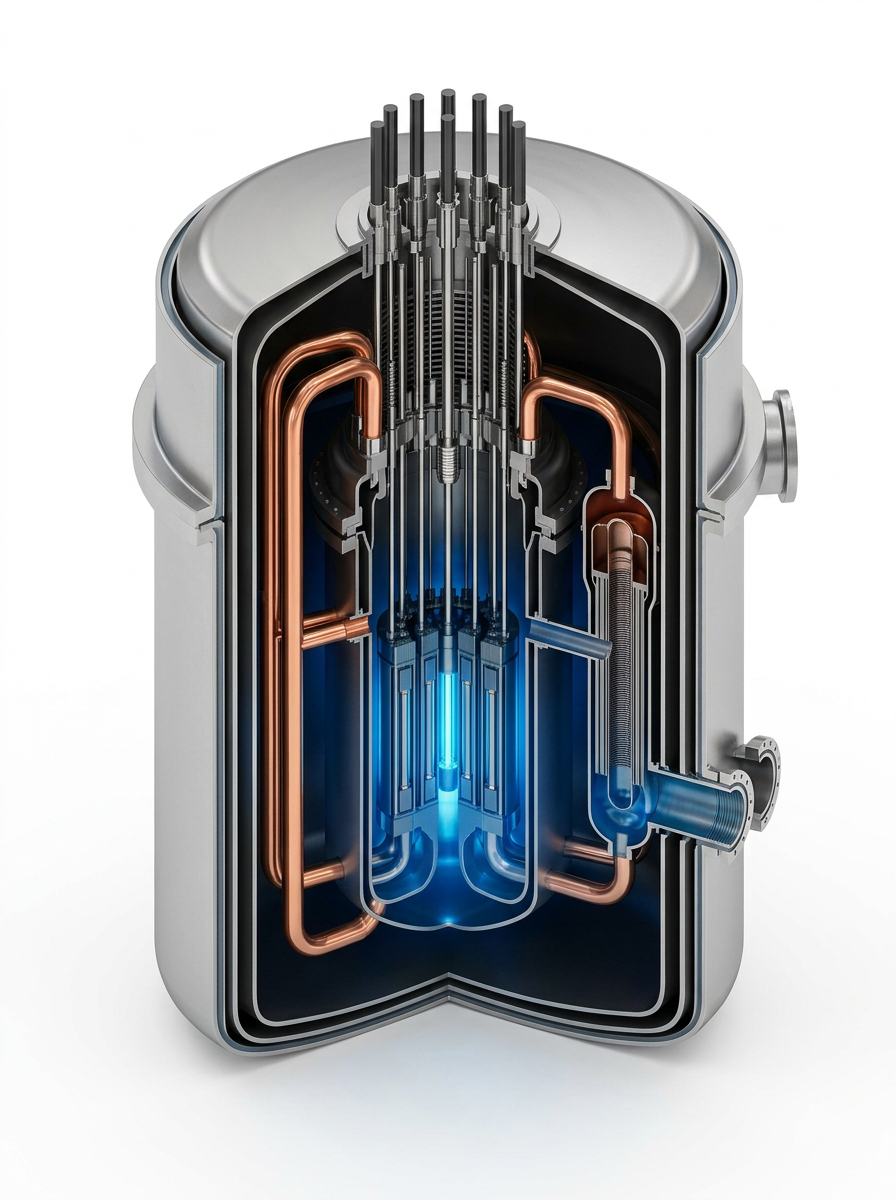
On March 4, 2026, the Nuclear Regulatory Commission voted to issue a construction permit for TerraPower’s Kemmerer Unit 1 in Wyoming — the first Natrium sodium-cooled fast reactor built for commercial power.
Three things about that decision matter more than the headline. It was the NRC’s first construction permit for a commercial power reactor in nearly a decade. It was the first approval of a commercial non-light-water reactor in more than forty years. And NRC staff completed the technical review in under eighteen months.
That third point is the one that reprices risk. Advanced reactor economics have always carried an unquantifiable regulatory tail: a design might be technically sound and still sit in review long enough to kill its financing. An eighteen-month technical review on a first-of-a-kind sodium fast reactor establishes a defensible planning basis where previously there was only hope.
The rest of the pipeline moved in parallel. Kairos Power, which received its Hermes permit in December 2023, broke ground on the larger Hermes 2 in April 2026. X-energy’s Xe-100 is under review for the Long Mott project — a Dow Chemical subsidiary siting high-temperature gas-cooled units at an operating chemical complex in Texas — with the NRC safety evaluation anticipated in November 2026 and a decision shortly after.
Note what Long Mott is: not a data center. It is an industrial process heat application, and it is arguably the more durable long-term market.
What Hyperscalers Are Actually Paying
Existing-fleet nuclear PPAs have generally been priced in the range of $45 to $70 per MWh. First-of-a-kind SMR deployments carry a construction-completion risk premium and price closer to $65 to $100 per MWh. Reporting on the Microsoft-Constellation arrangement has placed it above $100 per MWh.
Against merchant power in most U.S. markets, that is a premium. Hyperscalers are paying it for four reasons, and only one of them is carbon.
First, firmness. A training cluster’s economics depend on utilization. Capacity factor, not levelized cost, is the number that governs return on a multi-billion-dollar GPU deployment, and nuclear runs above 90 percent capacity factor without a storage stack behind it.
Second, price certainty across twenty years. A fixed-escalation PPA converts the single largest operating-cost variable into a known quantity, which is worth a premium to any organization underwriting infrastructure on that horizon.
Third, land and interconnection position. Buying the output of an existing plant means buying a site that already has transmission rights, a switchyard, and a community that understands what it hosts. In a 2,600 GW queue, that is the scarce asset.
Fourth, and only fourth, carbon accounting. Every one of these firms has a public emissions commitment that AI compute growth has made mathematically difficult. Nuclear is the only firm, dispatchable, zero-carbon-at-generation option available at this scale.
The Constraints That Will Actually Bite
Honest analysis requires naming the failure modes.
Fuel. Several advanced designs require high-assay low-enriched uranium (HALEU) enriched between 5 and 20 percent U-235. Domestic HALEU capacity remains thin, and the schedule for several SMR fleets is coupled to enrichment buildout that is itself a first-of-a-kind industrial project.
Heavy manufacturing. Large forgings, reactor pressure vessels, and steam-cycle components come from a small global supplier base with multi-year lead times. Standardized SMR designs are supposed to convert this from a bespoke problem into a production problem — but that conversion has not yet been demonstrated at volume.
Craft labor. Nuclear construction requires qualified welders, pipefitters, and instrumentation technicians working to ASME Section III and nuclear quality assurance programs. The U.S. lost much of that workforce depth between Watts Bar and Vogtle. Rebuilding it is a decade-long project, not a procurement line item.
The nth-of-a-kind assumption. Every SMR economic case depends on cost declining sharply from the first unit to the tenth. That learning curve is credible and it is also unproven for these specific designs. Vogtle Units 3 and 4 are the cautionary reference for what happens when first-of-a-kind cost overruns are treated as anomalies rather than as the base case.

The Signal Industrial Operators Should Read
The data center story dominates coverage, but the more consequential development for industrial operators is quieter.
Electricity is roughly a third of what a reactor produces. The rest is heat — and for high-temperature designs, heat at temperatures that are directly useful. The Xe-100 delivers steam in a range relevant to chemical processing. The KP-FHR operates at fluoride-salt temperatures suitable for high-grade process heat. Long Mott exists because Dow determined that a reactor adjacent to a chemical complex is an economically rational replacement for combustion-fired steam.
For refining, chemicals, and heavy process industry, that reframes the question. Nuclear stops being an electricity procurement decision and becomes a utilities and heat integration decision — one that touches steam balance, turndown behavior, startup and shutdown sequencing, and every process safety management boundary those systems cross.
That last point deserves emphasis. Coupling a nuclear heat source to a process plant means the reactor’s operating envelope and the plant’s PSM program now share interfaces. Process hazard analyses, mechanical integrity programs, and management-of-change procedures all need to account for a heat supply with different transient behavior, different regulatory oversight, and different failure modes than a fired heater. The engineering discipline required at that boundary is not new — but the specific integration is, and the industry has very little institutional experience with it.
What Comes Next
The near-term signposts are legible. The NRC decision on Long Mott’s Xe-100, expected around the end of 2026, will indicate whether the eighteen-month review timeline generalizes or was specific to TerraPower’s file. Three Mile Island Unit 1’s return to service will test whether restart schedules hold. Kairos Hermes 2 construction progress will show whether a non-light-water design can be built to schedule by an organization that has never built one commercially.
None of those outcomes is guaranteed. What has already changed is the planning basis. For the first time since the 1970s, a U.S. industrial or infrastructure operator can put an advanced reactor into a twenty-year capital plan and defend the assumption to a board — because the regulator has demonstrated it will act on a schedule, and because the largest technology companies in the world have already signed the offtake agreements that make the supply chain investable.
The physics never blocked this. The queue, the regulator, and the balance sheet did. Two of those three have now moved.
Timothy Porritt is founder of Porritt Inc., building AI-powered tools for process safety, engineering compliance, and industrial operations. Based in Salt Lake City, Utah. Contact: timothy@porrittinc.com