Oklo’s Groves-1 Clears Its Final DOE Hold Point — First Live Test of the NRC’s New Licensing Bridge
A 15 MWt isotope test reactor in rural Texas just became the first Reactor Pilot Program project to move from criticality into sustained operations — exactly the kind of operating history the NRC’s new data-reuse rule was built to accept.
By Timothy Porritt · Porritt Inc. · November 16, 2026
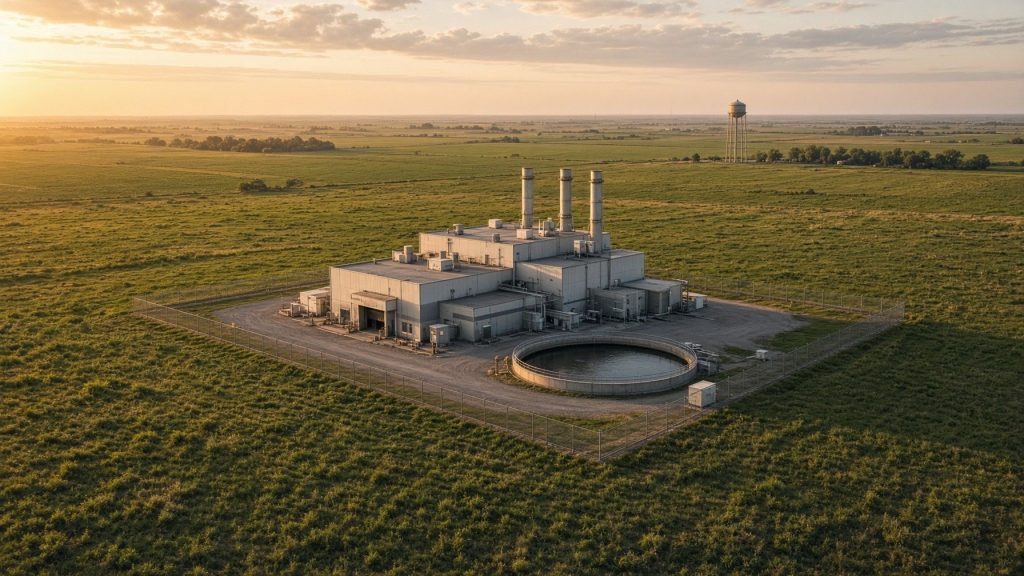
On November 12, 2026, the Department of Energy approved the final operations hold point for Oklo’s Groves-1 isotope test reactor outside Lockhart, in Caldwell County, Texas, clearing the reactor to move into what the agency calls unrestricted research, testing, and training operations. It is a small milestone dressed in a lot of acronyms, and it is easy to miss why it matters.
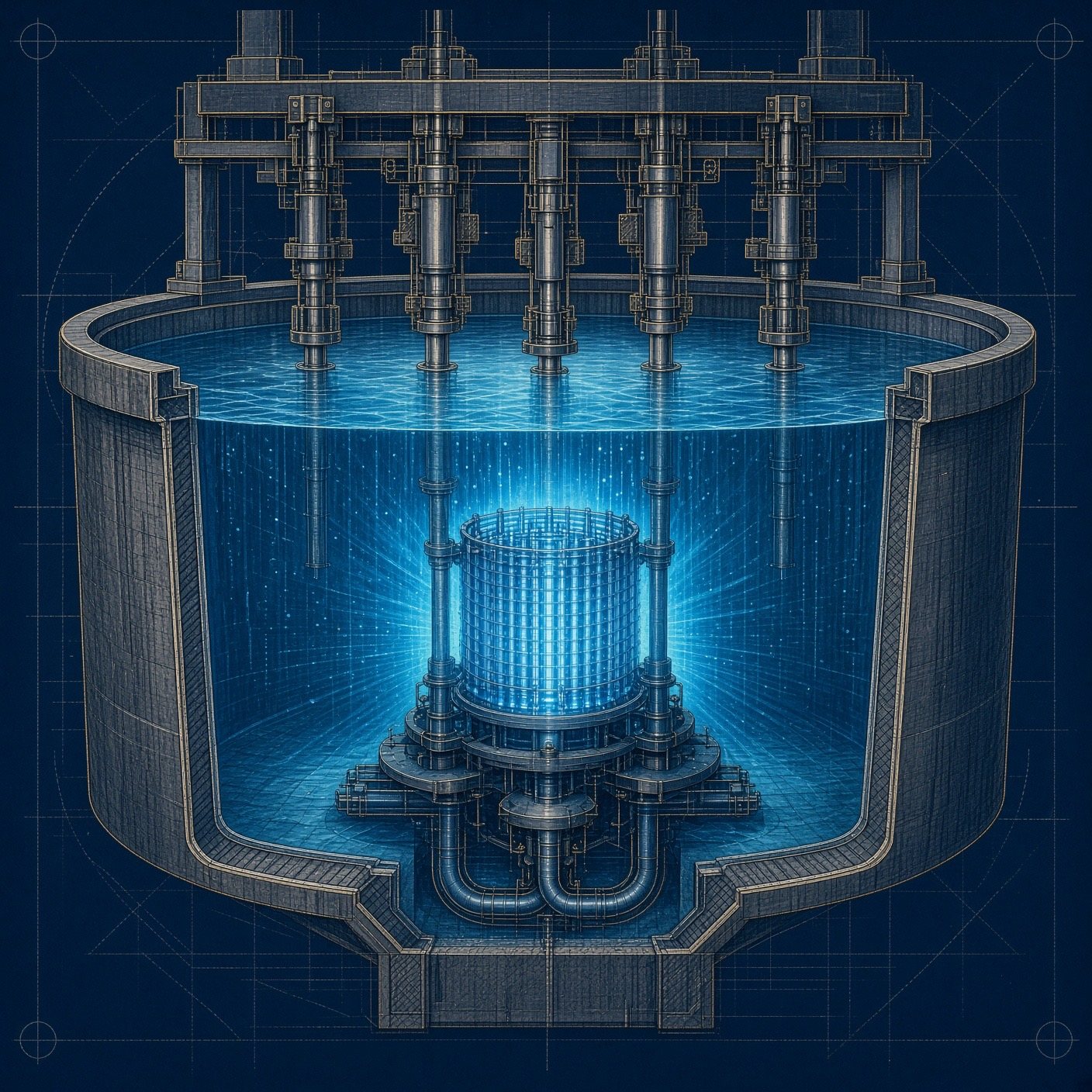
Groves-1 is a modest machine: a 15 MWt pool-type, water-cooled, nonpressurized test reactor built on a private greenfield site and operated by Oklo Isotopes, the subsidiary Oklo formed after acquiring Atomic Alchemy in 2025. It will never sell a kilowatt-hour. Its stated job is producing medical and industrial isotopes and, along the way, generating exactly the kind of sustained operating data that a brand-new reactor design can’t easily produce without years of Nuclear Regulatory Commission review.
The clearance matters for a reason that has nothing to do with isotopes. Three weeks earlier, the NRC finalized a rule letting advanced reactor developers reuse DOE and Department of War demonstration data in commercial license applications — targeting review timelines as short as 18 months for first-of-a-kind designs backed by enough prior operating history (Porritt Inc. covered that rule on its own on October 26). Groves-1 is now the first Reactor Pilot Program project to start accumulating exactly that kind of history past a single demonstration of criticality.
Fifth to Criticality, First Into Sustained Operations
Groves-1 reached first criticality in August 2026, less than a year after groundbreaking — the fifth DOE-authorized test reactor to go critical under the Reactor Pilot Program, and the first to do so on private land rather than at a national laboratory site. The four ahead of it were Antares (Mark-0, Idaho National Laboratory, critical June 4), Valar Atomics‘ Ward 250 (Utah San Rafael Energy Lab, critical June 18, reaching 10 kWt output four days later), Deployable Energy‘s Unity (INL, critical July 1), and Aalo Atomics‘ 10-MWe Aalo-X (authorized to proceed June 25). Each of those four hit criticality inside the window set by Executive Order 14301, which directed DOE to get at least three test reactors critical by July 4, 2026. Groves-1 came after that deadline, the fifth entrant — but it is the first of the five to clear a further gate: the “final operations hold point,” DOE’s checkpoint between a one-time criticality demonstration and sustained, authorized operations.
That distinction is the whole story. A reactor that reaches criticality once and shuts back down generates a single data point. A reactor cleared into unrestricted operations — DOE’s own phrase — generates months of control rod drive mechanism testing, criticality and reactivity benchmarking, and licensed-operator training data. Oklo says that operating experience will inform not just Groves-1’s planned isotope-production successor, a facility called Groves-2 Forge, but the company’s 75 MWe Aurora Powerhouse fast reactor and, potentially, light water reactor designs elsewhere in the industry.
A Parallel Track, Not an NRC License
The DOE Reactor Pilot Program authorization under which Groves-1 operates is not an NRC license. It is a separate pathway that lets DOE exercise its own statutory authority to authorize reactors on DOE-controlled or DOE-authorized sites for demonstration purposes, explicitly outside the NRC’s Part 50/52 commercial licensing framework. Selected in August 2025 as one of 11 RPP projects, Oklo built the Groves-1 site, poured the civil works, fabricated or procured every reactor component including fuel, and wrote its own operating programs in-house. DOE’s role was authorization and oversight, not construction — a sharply faster model than a conventional NRC combined license review, and one that trades a utility-scale power reactor’s revenue for a test reactor’s speed.
What makes the November clearance significant is timing relative to a separate regulatory action, not new physics. On October 22, 2026, the NRC finalized a rule under its 10 CFR Part 53 advanced reactor framework explicitly built to accept DOE and Department of War demonstration data as evidence in commercial license applications, with the agency targeting review timelines as short as 18 months for first-of-a-kind designs backed by sufficient prior operating history. Groves-1’s new operations phase is the first Reactor Pilot Program project to start accumulating the kind of sustained, multi-month operating data that rule was written to accept. Nothing has been filed yet — Oklo has not announced a Groves-1-sourced data package headed to the NRC — but the sequence the rule anticipates (RPP criticality, then RPP sustained operations, then an eventual Part 53 filing citing that data) is now live for the first time rather than hypothetical.
The Commercial Path Runs Through Aurora, Not Groves
Groves-1 sits one step removed from Oklo’s actual revenue driver: the Aurora Powerhouse, a 75 MWe liquid-metal-cooled fast reactor the company plans to deploy at Idaho National Laboratory and, longer term, at a 1.2 GW campus in Pike County, Ohio — the project for which Centrus Energy agreed to supply HALEU fuel starting in 2029. The NRC has already accepted Oklo’s Licensed Operator Topical Report for review, and the company remains in pre-application activities for an Aurora combined license. Groves-1 will not substitute for that NRC review. What it can do, under the new Part 53 data-reuse rule, is shorten it — by supplying operating history on control systems, reactivity behavior, and licensed-operator performance that would otherwise have to be generated from scratch inside the NRC process itself.
What Each Competing Path Actually Buys
Groves-1’s DOE Reactor Pilot Program route is not the only way advanced reactors are reaching the grid, and it is worth being honest about what each path buys. Kairos Power took the traditional NRC construction-permit route for its Hermes 2 molten-salt demonstration unit in Oak Ridge, Tennessee, and raised $643 million in October to build it — a capital-intensive bet on a fully NRC-licensed demonstration reactor that is itself meant to feed commercial Hermes plants. X-energy and Dow received an NRC construction permit in September for a four-reactor Xe-100 high-temperature gas-cooled plant at Seadrift, Texas, backed by a chemical company’s own captive power demand. The Tennessee Valley Authority received the first US construction permit for a GE Vernova Hitachi BWRX-300 small modular reactor, also in September, for a conventional utility-scale deployment at Clinch River. Each of those three projects is years from first criticality and carries full NRC Part 50 review from day one — slower, but it produces a construction permit a utility or industrial customer can finance against today.
Groves-1’s bet is the opposite: trade reactor size and revenue potential for speed and data. A 15 MWt test reactor that goes from groundbreaking to criticality to sustained authorized operations in roughly fifteen months generates real-world operating data years before a Part 50 combined license review would otherwise produce anything comparable. Whether that data materially shortens Oklo’s own Aurora review — or anyone else’s, once the Part 53 rule is tested in an actual filing — is the open question the rule exists to answer. Groves-1 is now the only project with standing to try.
Implications
For DOE, Groves-1’s clearance is evidence that Executive Order 14301’s Reactor Pilot Program mandate is translating into sustained operations, not one-time criticality demonstrations. Of the four reactors that reached criticality ahead of the July 4 deadline — Antares, Valar’s Ward 250, Deployable Energy’s Unity, and Aalo-X — none has yet been reported moving past that single-demonstration stage into DOE’s “unrestricted operations” classification. Groves-1 is first.
For the AI-and-power-demand story dominating energy coverage this year, the connection is indirect but real: every month Groves-1 spends in sustained operation generates reactivity and control-system data that Oklo has explicitly said will inform Aurora, the fast reactor aimed squarely at data-center colocation. The isotope-production mission is genuine and medically useful in its own right — Texas Governor Greg Abbott specifically cited the medical-therapy angle — but the regulatory data stream is the part the rest of the nuclear industry should be watching.

The Physics Doesn’t Change — Only What Has to Be Re-Demonstrated
None of this changes the physics of a 15 MWt pool reactor. Groves-1 operates at a thermal power low enough that decay heat removal, shielding, and fuel thermal margins are comparatively forgiving engineering problems next to a 75 MWe liquid-metal fast reactor or a 300 MWe BWRX-300. That is precisely why DOE authorized it as a test platform rather than a power plant, and precisely why its operating data is useful to the harder designs without being a substitute for testing them directly. The new NRC rule does not let anyone skip physics; it lets them stop re-demonstrating physics that a DOE-authorized reactor has already shown behaves as predicted.
Groves-1 will not power a data center, a refinery, or a home. What it will do, every week it stays in unrestricted operations, is add one more entry to the operating-history ledger the NRC’s October rule was built to read. That ledger is small today. Whether it grows fast enough to matter for Aurora, Hermes 2, Xe-100, or BWRX-300 is a question the next twelve months of DOE Reactor Pilot Program filings — and the first Part 53 application that actually cites one — will start to answer.
Related reading
- The NRC Just Cut the Path From Government Reactor Tests to a Commercial License — to 18 Months
- Eleven Months From Executive Order to Critical Reactor: What Antares’ Mark-0 Just Proved — and What It Didn’t
- The Aurora Compact: Oklo’s 13.2 GW Hyperscaler Demand Stack and Why DOE’s $94M Tier 2 Awards Are the Other Half of the Same Trade
- 20 Days Until the Genesis Mission Deadline — What I’ve Learned Competing Against Google and J.P. Morgan for DOE Funding
Timothy Porritt is founder of Porritt Inc., building AI-powered tools for process safety, engineering compliance, and industrial operations. Based in Salt Lake City, Utah.